


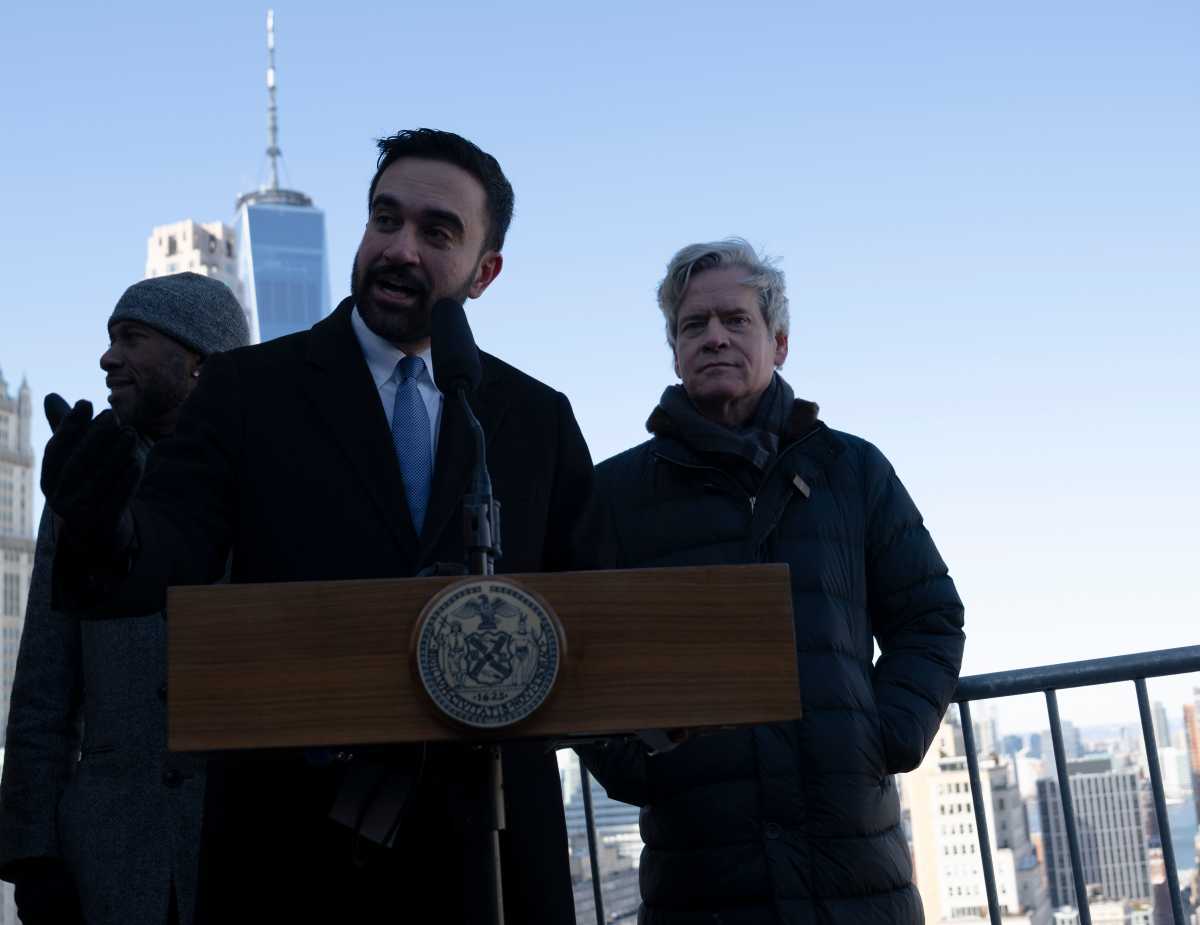
Sixteen people have died outdoors in New York City during the extended stretch of extreme cold, Mayor Zohran Mamdani said Monday, as the city marked its 11th consecutive day of below-freezing temperatures.
According to the mayor, preliminary findings show hypothermia played a role in 13 of the deaths, while three appear to be overdose-related. Final determinations are still pending from the Office of the Chief Medical Examiner. “Each of these lives lost is a tragedy,” Mamdani said. “My heart is with the families of those mourning their loved ones.”
Mamdani said that based on information available so far, none of the individuals who died were living in homeless encampments at the time of their deaths.
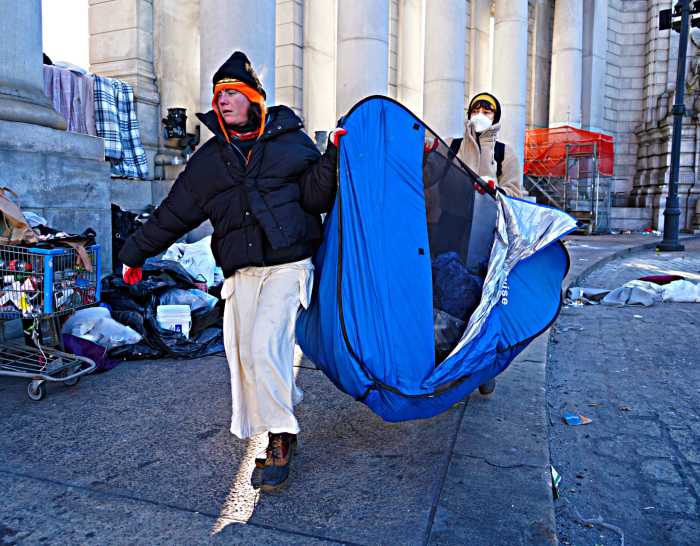
Before taking office, Mamdani stated that he would halt the city’s policy of sweeping homeless encampments, arguing that the initiative during the Adams and de Blasio eras failed to connect people living on the streets with stable housing. In the face of criticism from elected officials like Gov. Kathy Hochul, Mamdani pledged that his administration would focus on linking people to supportive or rental housing rather than continuing the multi-agency clearings.
He has proposed addressing street homelessness through his Department of Community Safety, which would reduce the police’s leading role in these interactions when established. A bill is currently working its way through the City Council to establish the unit, but the NYPD has been among the city agencies engaging in the Code Blue outreach.
“The policy on encampments, we have long said that it was a failure to pursue a policy in the manner that the previous administration did, and we’ve said that it’s a failure because of its having only connected three New Yorkers with permanent housing over the course of 365 days,” Mamdani said Monday. “So our policies will continue on the same timeline as they were prior. However, instead of looking to just push New Yorkers from one encampment to another part of this city, we’re going to look to emphasize the services that we can connect those New Yorkers with.”
The five boroughs has seen sharp rise in outdoor deaths during extreme cold, reaching 54 in 2022, the latest year for which data is available. Totals have fluctuated in earlier years, ranging from a low of nine in 2006 and 2011 to highs of 27 in 2007 and 26 in 2018.
Extreme cold in NYC on track for all-time record: Mamdani
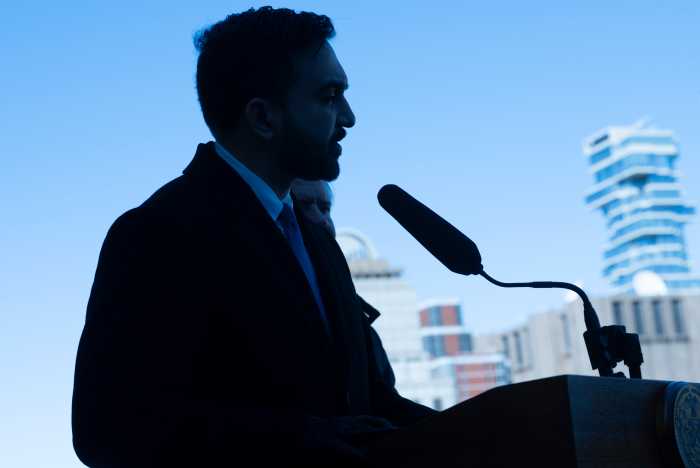
Mamdani warned that the city may be in the middle of “the longest period of consecutive sub-32-degree weather in our city’s entire history without temperatures rising above freezing,” and urged residents to call 311 if they see someone in need and to check on vulnerable neighbors, including older adults, people with disabilities, and those without reliable access to heat.
“If you see someone in need, please call 311,” he said. “We will get through this cold, and we will get through it together by looking out for one another and by caring for one another.”
The city remains under a Code Blue emergency, which triggers expanded outreach and shelter access for unhoused New Yorkers during severe weather. Mamdani said outreach teams have made more than 930 placements into shelters and safe havens since the Code Blue emergency began. “Every single person will be cared for. No one will be turned away,” he said.
The city has expanded shelter capacity, relaxed intake rules, and added 50 single-room shelter units for people who are uncomfortable in congregate settings.
Officials have also deployed a fleet of 20 mobile warming units staffed with clinicians and involuntarily transported 18 people who were determined to be a danger to themselves or others.
The prolonged cold has complicated snow removal efforts across the city, with officials saying the lack of warmer temperatures has prevented snow and ice from melting naturally. “The cold is showing no signs of stopping, so neither will this city’s efforts,” Mamdani said.
As of Monday morning, Mamdani said city workers had cleared 44,646 crosswalks, 16,532 bus stops, and 9,764 fire hydrants. Sanitation crews have laid more than 209 million pounds of salt and removed or melted more than 122 million pounds of snow citywide.
Roughly 2,500 sanitation workers are operating 12-hour shifts, supported by up to 1,500 additional workers reassigned from other city agencies to help clear bus stops, sidewalks, and crosswalks. Trash collection is currently running about 24 hours behind schedule, according to the mayor.