

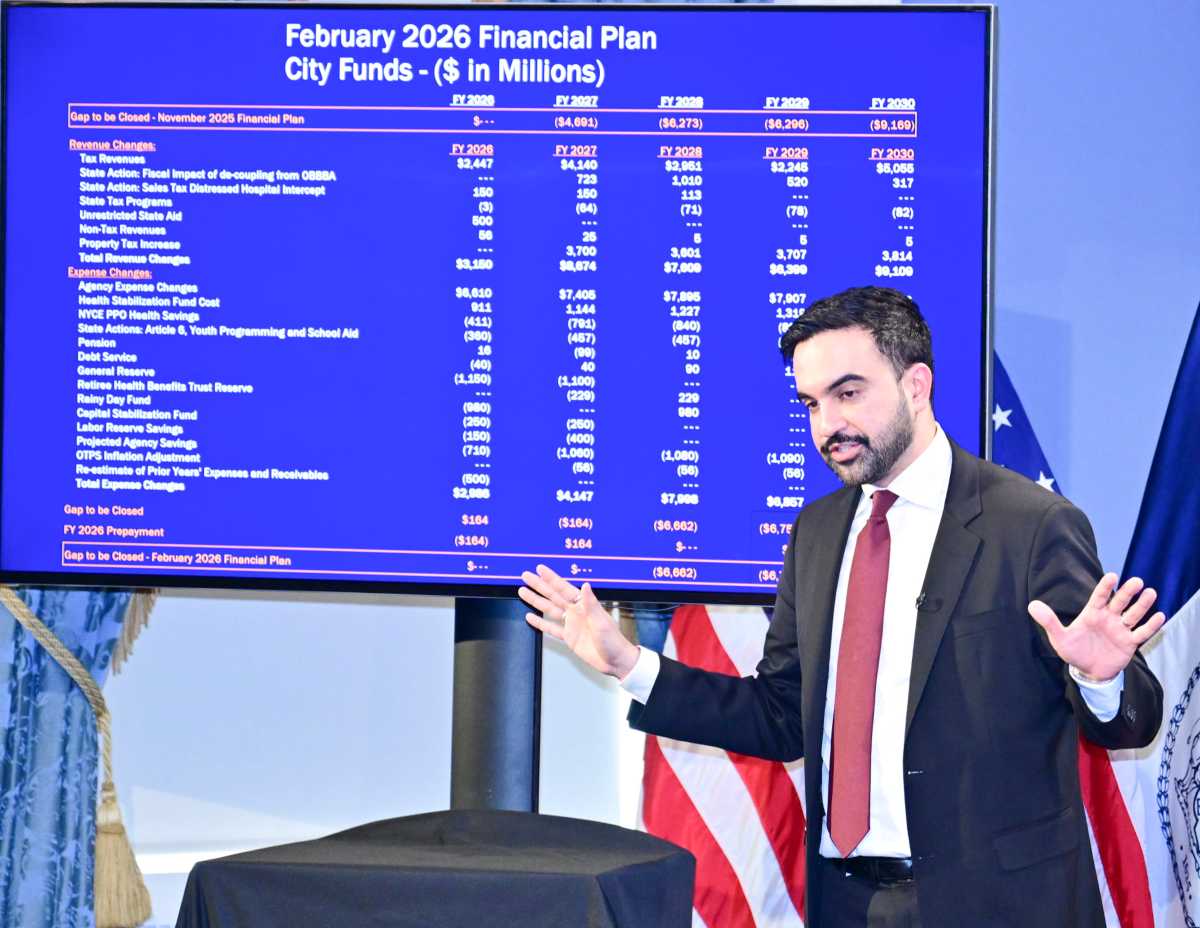
Mayor Zohran Mamdani said last week that tax increases are vital to help the city close its $5.4 billion budget gap — but various business groups and other observers argue that there are plenty of other ways to reduce or even eliminate the deficit.
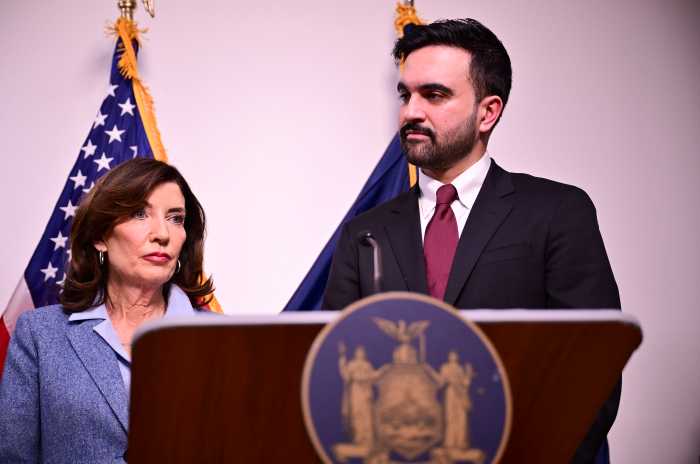
Mamdani proposed a preliminary budget with a $5.4 billion two-year gap, after Gov. Kathy Hochul stepped up with an additional $1.5 billion for New York City, citing a reluctant “path of property taxes and raiding our reserves” as a last resort. He described the property tax path as a “last resort” should the state decline to increase taxes on wealthy New Yorkers and corporations; Hochul has repeatedly said she would not support any new tax increases.
“Faced with no other choice, the city would have to exercise the only revenue lever fully within our own control,” Mamdani said on Feb. 16. “We would have to raise property taxes. We would also be forced to raid our reserves.”
But the mayor could not increase property taxes on his own; he would need the City Council to go along with the plan in negotiating the final budget this spring. City Council Speaker Julie Menin has already come out against considering property tax increases at this time.
Still, were Mamdani’s “last resort” vision to come to pass, a property tax increase in New York City would affect more than 3 million single-family homes, co-ops, and condos, as well as over 100,000 commercial buildings. Business leaders say it would only make a difficult financial situation worse.
“The deficit the city is facing is real,” said Jessica Walker, President and CEO of the Manhattan Chamber of Commerce, which advocates on behalf of e 125,000+ businesses employing 2.4 million and generate more than $1 trillion in annual gross domestic product. “The proposal being put forward are counter-productive and potentially harmful.”
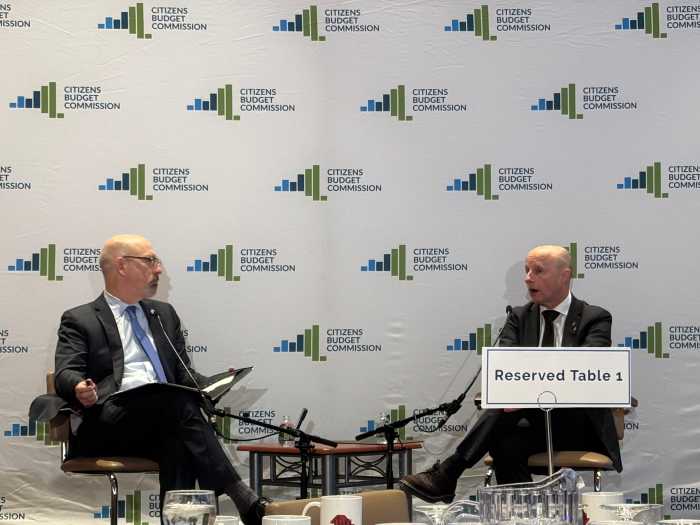
Citizens Budget Commission President Andrew S. Rein offered similar sentiment.
“Paired with freezing the rent, a property tax hike would exacerbate the fiscal insolvency and deterioration of pre-1974 rent-stabilized buildings,” he said.
And Valentina Gojcaj, owner and manager of multi-family buildings in New York City, said hiking property taxes would exacerbate concerns over expensive housing.
“He ran on telling us he’s going to make everything affordable,” said Gojcaj, a board member of Small Property Owners of New York (SPONY). “How is he going to make everything affordable, when he’d raise property taxes almost 10%?”
Market-rate tenants would be hit hardest as tax increases are passed on. “The instant there’s a renewal, the owner would have to raise rents to cover the costs,” Gojcaj said.
Mamdani also suggested the city could take $1.2 billion from its Rainy Day Fund and Retiree Health Benefits Trust ($980 million from the fund in fiscal 2026 and $229 million from the trust in fiscal 2027).
Rein said that would deplete “funds that should be saved for recession and to pay for future retiree health benefits.”
Save, not spend
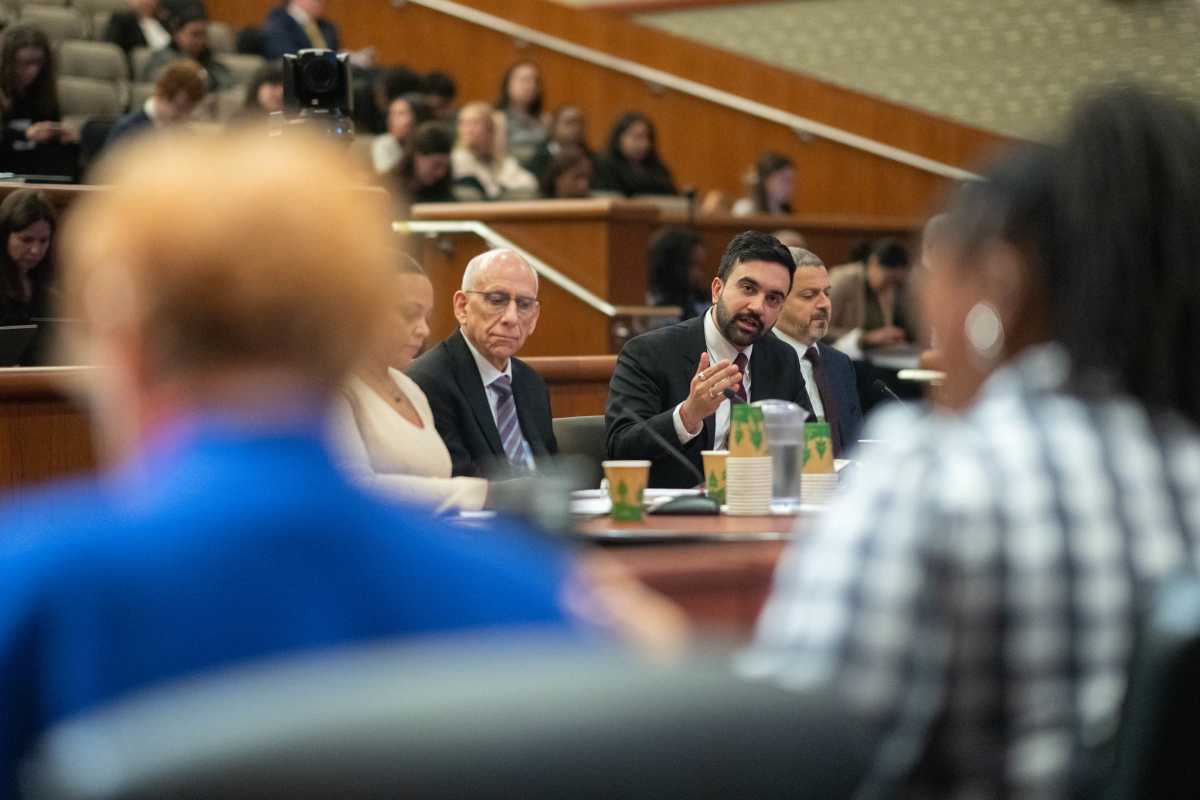
While Mamdani said he has already found savings, some said the best way to balance the budget is to shrink spending further.
Mamdani put forward a $122 billion budget for fiscal 2026 and $127 billion in fiscal 2027, up from Mayor Adams’ budget of about $118 billion, although Mamdani said current gaps resulted from “significant underbudgeting for major expenses.”
“The best choice is to eliminate spending that does not improve New Yorkers’ lives and make government more efficient and effective,” Rein said. “Streamline operations by using technology and eliminating wasteful bureaucratic processes.”
Walker said the city’s budget is larger than the municipal budgets of Chicago, Los Angeles, and Houston combined — all evidence that the problem is not about what the city takes in, but rather what it puts out.
“New York does not have a revenue problem,” she said. “It has a spending velocity problem. And this budget accelerates it.”
In a phone interview with amNewYork, Walker elaborated on steps that she believes led to momentum in terms of more spending, along with some growing, unavoidable expenses.
“This budget has been ballooning in recent years,” Walker said. “They use temporary revenue, such as federal grants during the COVID era, to fund long-term structural programs.”
Savings officers
Mamdani recently created chief savings officers (CSOs) for each city department, tasked with finding 1.5% savings ($710 million) this fiscal year and 2.5% ($1.06 billion) next year. These officers must issue public reports by March 20.
“The city should redouble its efforts to find more substantial savings by the executive budget,” Rein said.
Walker believes CSOs can help close the gap, possibly shrinking spending, possibly more than targeted. Years ago, then-Mayor Michael Bloomberg, she noted, demanded 5 % across-the-board cuts routinely.
“We think the real solution is to let the mayor’s chief savings officers do their job,” Walker said of this initiative.
Rein said the city could also save up to $1 billion by receiving relief from state class-size mandates and $400 million by adjusting school funding for declining enrollment.
Another $200 million could be retained by consolidating union welfare benefit funds and more from procurement reform, he added.
Grow revenues
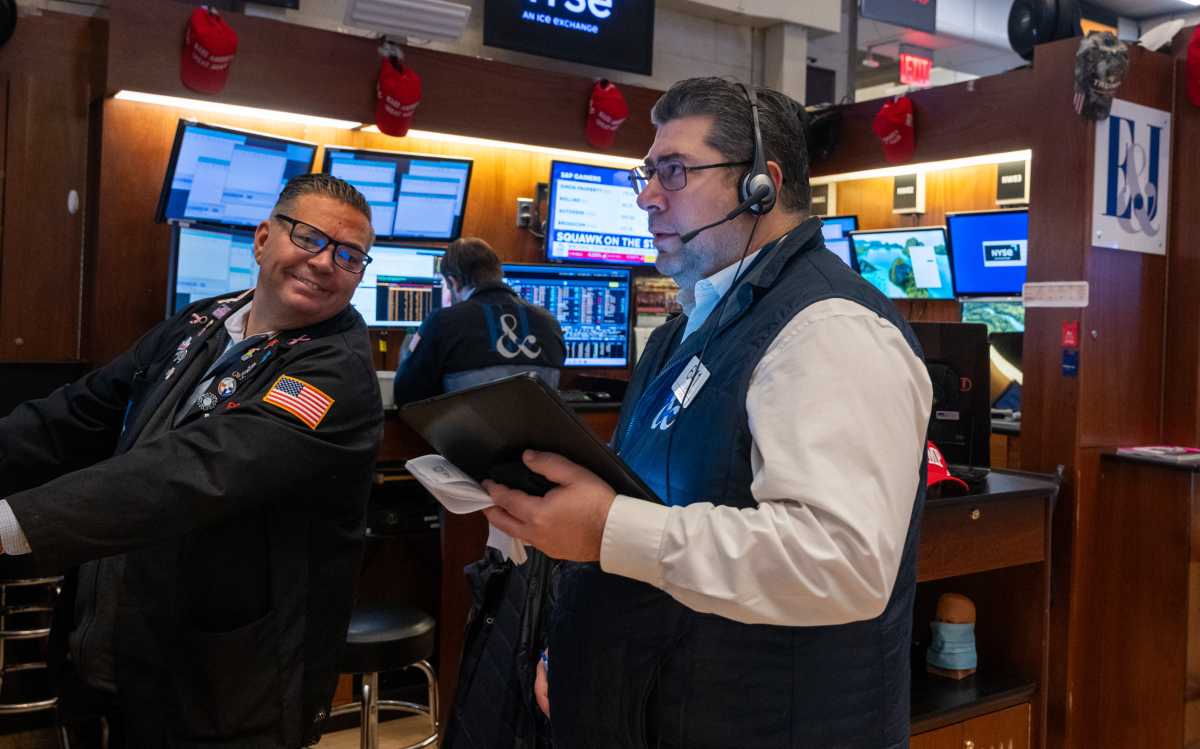
Tax revenues also could rise if Wall Street performs better than projected, further reducing the deficit.
“Wall Street profits are at a record high, surpassing any projections and allowing us to incorporate more revenue than anyone anticipated,” Mamdani said of already increased projections.
He said that it has already been translated into $2.4 billion more than anticipated for fiscal year 2026 and $4.9 billion more for fiscal year 2027.
“That deficit could come down because of Wall Street revenues,” Walker continued. “I do believe that will come down.”
What some are calling the “Summer of Opportunity” is also approaching with the 2026 FIFA World Cup to be hosted in the region as well as the nation’s 250th anniversary celebrations, such as Sail4th 250.
Walker said home-sharing apps like Airbnb and others are strictly limited in New York City, depriving the region of tax revenue and spending by those who may stay elsewhere.
“We’re suggesting we follow the suit of other cities like Paris,” Walker added. “Temporarily lift the restrictions so we can maximize the economic impact.”
The Mayor’s new World Cup Czar, Maya Handa, may develop strategies to grow revenue for the city. “There will be some innovation very soon,” Walker said.
The air that we breathe
Part of the answer to the city’s financial problems may be blowing in the wind, or in the air above our heads, according to Andrew Rasiej, founder of Civic Hall.
In an op-ed in City & State New York, he suggested the city could sell unused development rights, or air rights, above city-owned property.
Although rights typically must be sold to adjacent properties, the City in the 1990s created the Theater Subdistrict, allowing Broadway theaters to sell air rights across a wider swathe of Midtown.
“The city should now apply that same logic to its own assets,” Rasiej in the op-ed said of air rights from schools, libraries, sanitation and public safety facilities, community centers and other municipal sites.
“We need to get creative here and not fall into this trap that the only way to close this trap is to raise taxes,” Walker said. “I think it’s a great idea. It needs to be fleshed out.”