


Nothing cross-examines a New York City mayor in the court of public opinion quite like a major winter storm, as Mayor Zohran Mamdani is about to learn.
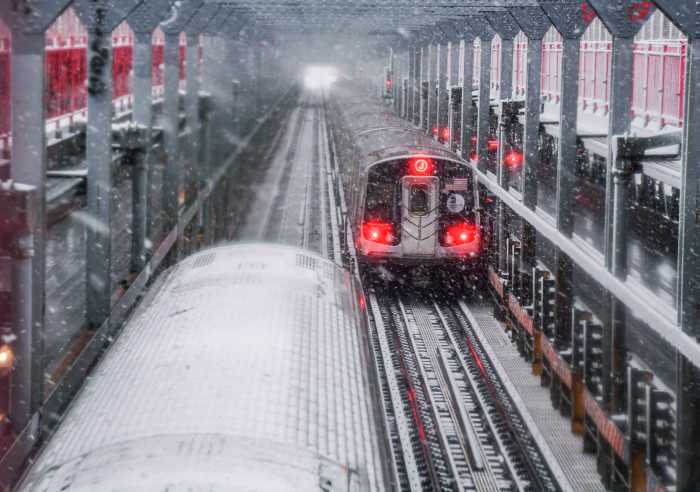
Just three weeks into his four-year term as the city’s chief executive, Mamdani has spent the latter half of this week gearing up for a dramatic nor’easter expected to blow in early Sunday morning. As of Friday afternoon, forecasts predict between 10 and 15 inches of snow will fall between Sunday and Monday.
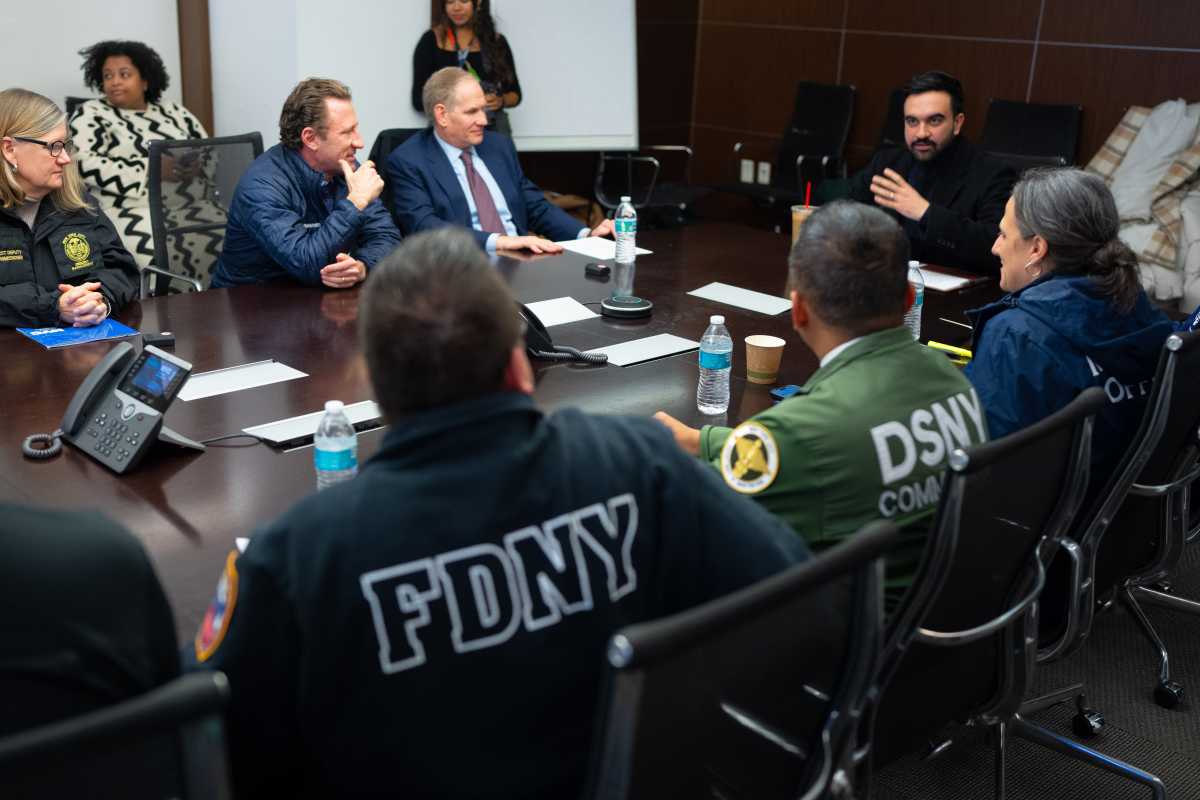
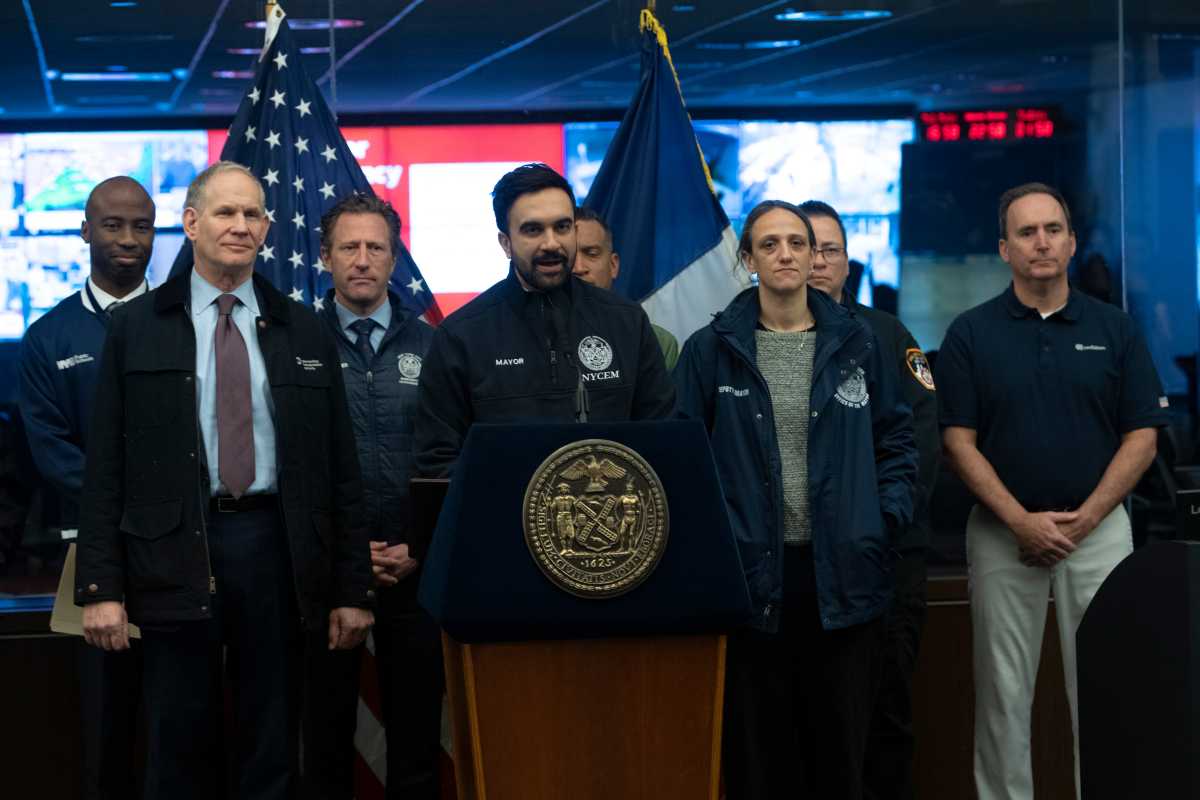
Donning a classic New York City Emergency Management sweater for a Friday morning snow briefing, the mayor emphasized the serious nature of the impending storm and affirmed that his administration is ready for whatever lies ahead. The city began salting streets on Friday, and has snow plows at the ready, he said.
New York has a fraught political history with blizzards. If history is any indication, Mamdani could take some serious heat if parts of the city are left out in the cold during the storm response.
Previous mayors have suffered serious approval rating hits for failed responses to freezing temperatures and heavy snow. A particularly poor response by former Mayor John Lindsay to a storm in 1969 left the city in a “state of near paralysis” and was blamed for the deaths of 42 New Yorkers.
Mamdani’s predecessor, former Mayor Eric Adams, even distanced himself from his previous job in a Friday post on X, urging disgruntled New Yorkers to take their complaints elsewhere.
“Reminder: I don’t run City Hall anymore,” Adams wrote. “Yelling at me on Twitter will not speed up snow removal.”
amNewYork examined the history of blizzard response in New York City — and the political consequences at stake — as the five boroughs brace for the cold.
John Lindsay, 1969
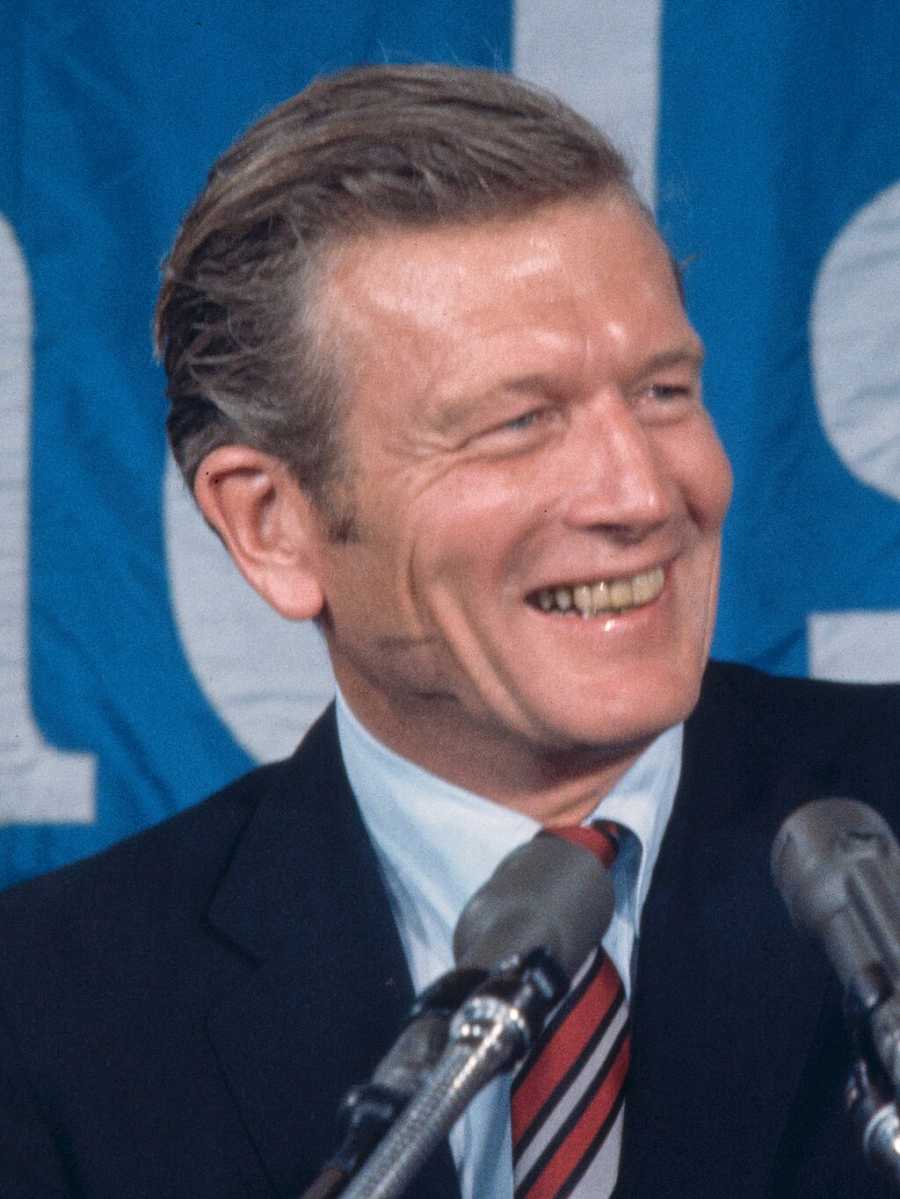
A February 1969 snowstorm wreaked havoc not just on New Yorkers, but on then-Mayor John Lindsay, whose bungled response to the blizzard left many blaming him for the storm’s destruction.
The blizzard dumped 15 inches of snow, killed 42 people and injured 288 others. A 2001 book by Vincent Cannato titled “The Ungovernable City: John Lindsay and His Struggle to Save New York” describes the storm and the poor response as leaving the city “in a state of near paralysis” for three days.
Forecasts had only predicted heavy rain, not a blizzard. The city’s environmental protection administrator, Merril Eisenbud, was out of commission in upstate New York, and close to 40% of the city’s snow removal equipment was unusable, a result of long-term neglect.
Queens was hit particularly hard. Along with Staten Island, the borough generally faces the brunt of New York City storms due to its coastal position. Lindsay was accused of neglecting Queens, which saw half the total deaths, and he attracted even more vitriol when, upon visiting, his limousine was unable to pass through Rego Park because the streets were unplowed.
George Artz, who served as former Mayor Ed Koch’s press secretary, said that a solid snowstorm response is essential for mayors working to build credibility with the public.
“It’s a test of competence, and people get their first view of what a mayor can do under pressure,” Artz told amNewYork, noting Lindsay’s disastrous response. “Other mayors who had snowstorms, succeeding Lindsay’s, would say, ‘You don’t want to be another Lindsay.’”
Lindsay suffered a hit to his popularity, though he pulled through in his reelection campaign later that year, serving another four years in City Hall.
The city’s neglect of Queens during the 1969 blizzard served as a lesson for future mayors, including Koch, Artz said, who was Lindsay’s second successor. Koch made a point to focus on Queens in his various snowstorm responses, Artz said.
Mamdani, who just moved to the Upper East Side’s Gracie Mansion from his apartment in Astoria, Queens, should plan to do the same, Artz said, offering advice for the new mayor.
“I would say, call your emergency agencies in, make sure they’re aware that this is important for you, and hear their plan on getting things out, especially in communities that usually receive a secondary approach,” Artz said. “I’m sure he’ll do that.”
Michael Bloomberg, 2010
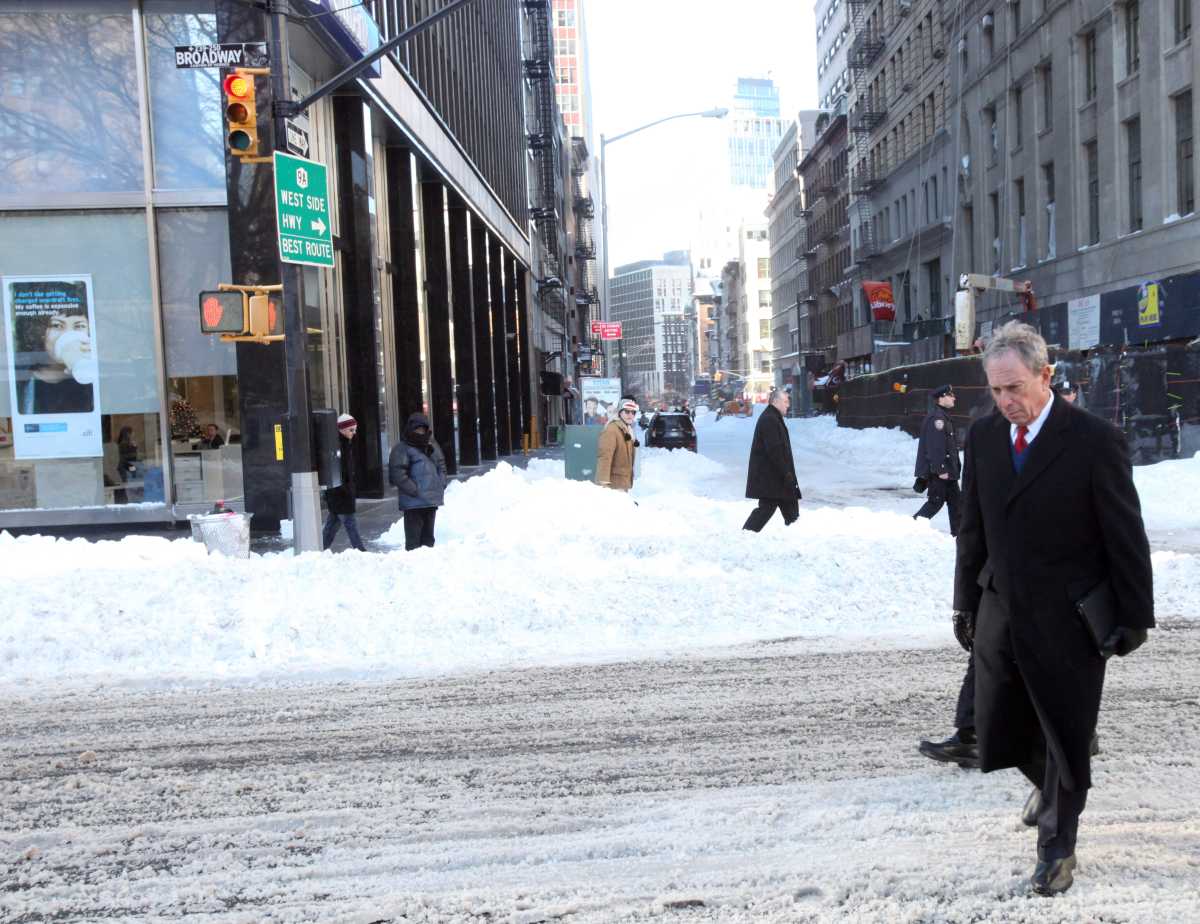
Mayor Michael Bloomberg caught criticism in 2010, the first year of his third term in office, for the city’s failed blizzard response, largely owing to system crashes and an inadequate emergency response system.
Bloomberg took the blame for the failed response, saying he was “extremely dissatisfied” with the performance. Emergency phone lines were overloaded with calls, snow plows were unprepared, and cars and buses blocked snow plows once they were activated.
“Everybody has worked hard,” Bloomberg said at the time. “The results were not what we’d like them to be, but it has not been for lack of effort. And we’ll find out what was different this time and try to do everything we can to make sure it’s better the next time.”
The scrutiny on Bloomberg was heightened by the revelation weeks later that his private jet was seen landing in Bermuda on the eve of the snowstorm.
Mamdani has assured New Yorkers that the city’s emergency management system, which has a checkered past, is prepared this time around.
“This weekend is going to be cold, it is going to be windy, and above all else, it is going to be a weekend where your city is prepared,” Mamdani said Friday morning. “Across every single level of government, we are working together to ensure that our streets are being kept clear, that New Yorkers are safeguarded, and that the most vulnerable among us are being connected with shelter.”
Bill De Blasio, 2014 and 2018
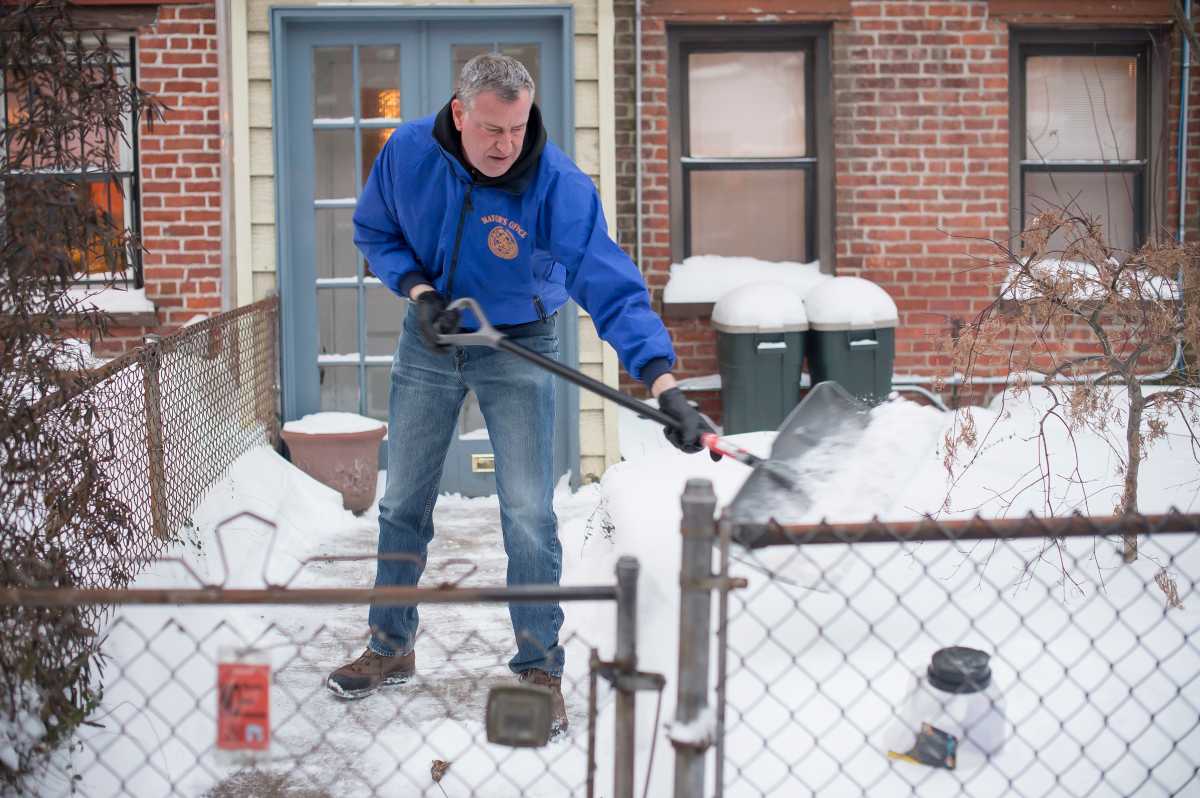
Former Mayor Bill de Blasio, Adams’ predecessor who supported Mamdani in the 2025 election, felt the wrath of Upper East Siders in 2014, when they accused the mayor of neglecting Manhattan in favor of the outer boroughs following a slow response to a January snowstorm.
At the time, the freshly inaugurated de Blasio denied that he had treated any of New York City’s neighborhoods any differently in his administration’s storm response. Within hours, he admitted the response was lackluster.
“After inspecting the area and listening to concerns from residents earlier today, I determined more could have been done to serve the Upper East Side,” he said at an evening press conference later that day.
In an interview with Gothamist earlier this week, de Blasio said he “felt unjustly accused” at the time.
“If I could do it once again, I wouldn’t have been hung up on that,” he told Gothamist.
De Blasio later faced accusations of being too liberal with calling snow days — an issue that poses less of a threat to Mamdani, who has the post-COVID pandemic option of remote schooling in lieu of a total cancellation.
Artz noted that Mamdani, and his recent predecessors have enjoyed the luxury of digital and social media as a means to spread the word about emergency preparedness.
There’s no way to know how the new administration’s actual storm response will look like, or even how much snow New Yorkers will end up seeing, but Mamdani is so far succeeding in the awareness campaign, Artz said.
“Back then, we didn’t have digital ways of telling people, but of course, digital, I see warnings all the time,” Artz said.
Criticism of De Blasio’s storm handling continued throughout his eight years in office, punctuated by a botched snowstorm response in 2018 that led to the ouster of then-Emergency Management Commissioner Joseph Esposito.
The November storm, which covered the city in six inches of snow, left thousands of commuters stranded and forced some New Jersey children to spend the night in school after buses were canceled.
“I don’t think it’s fair to say that the city agencies could have stopped all of this,” De Blasio said at the time, noting that the storm caught city leaders largely off guard. “I’m not going to do that because I think that’s just too convenient.”