


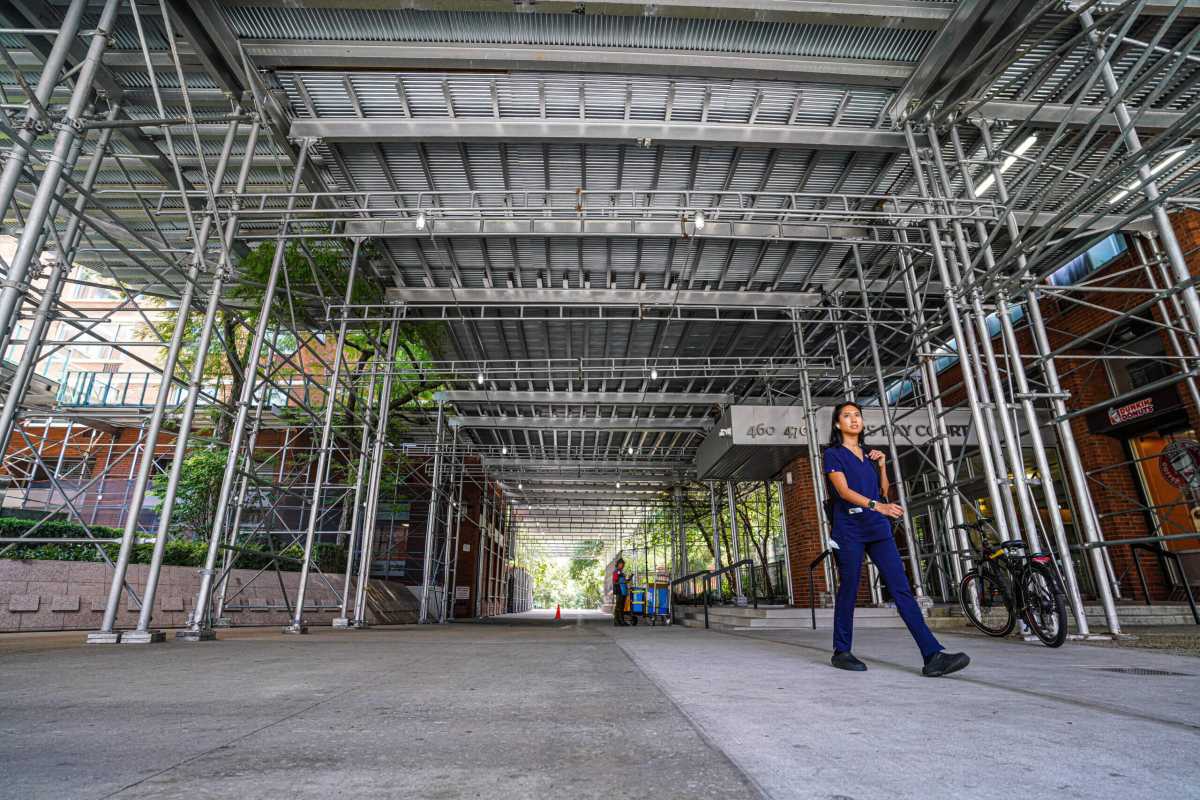
The state’s construction injury liability laws are costing New York’s economy billions of dollars on Metropolitan Transportation Authority projects and other capital improvements, killing jobs and stalling affordable housing progress, according to a report published on Wednesday.
The Building Trades Employers’ Association (BTEA) released a report from HR&A Advisors, an economic consulting firm, on Dec. 10 that they said shows in detail the “devastating economic toll” of the state’s absolute liability standard, known as the “scaffold law.”
The scaffold law holds employers and property owners fully liable if a worker is injured due to a fall while working at high elevations without safety equipment. Some elected officials and others in the construction industry have blamed the law for rising insurance costs.
Supporters of the law say it is necessary to protect the many workers who perform some of the state’s most dangerous construction jobs.
The new report shows that insurance costs in New York are 200% to 500% higher than other states because of the law, which researchers said drains “billions of dollars” from the economy.
Per the analysis, which is based on a proprietary look into the books of some of the state’s largest builders, insurers and public sector institutions, shows that insurance premiums now consume 8% to 10% of total development costs in New York, compared to just 2% to 4% in states like New Jersey, Massachusetts and Illinois.
Agencies like the MTA could be affected by the high costs, according to Elizabeth Crowley, president and CEO of the BTEA.
“For decades, New York’s insurance law has pushed construction budgets to the brink, forcing developers and public authorities like the MTA to waste billions on premiums that don’t make construction work any safer and are a driving force behind the affordability crisis that is crushing our state’s economy,” she said.
She said money on the dollar is often wasted on insurance premiums covering “absolute liability” that no other state embraces.
“The scaffold law isn’t just setting our economy up for failure, it’s killing our ability to embrace abundance on everything from affordable housing to new schools and subway lines,” Crowley continued. “Between the Penn Station redevelopment and Phase 2 of the Second Avenue Subway alone, the MTA could save over a billion dollars of taxpayer money through this one simple reform.”
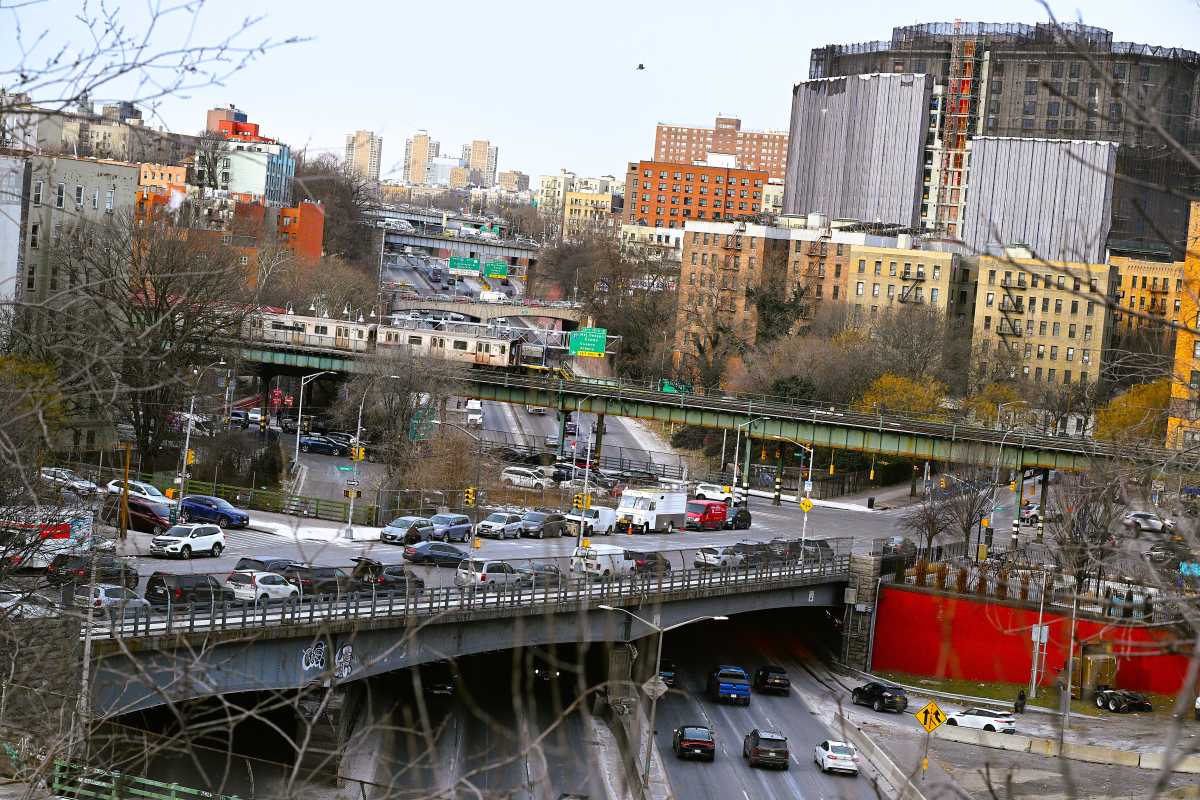
Although the state-run MTA relinquished oversight of the Penn Station redesign, it continues to work on a significant handful of construction projects, including massive ones like the Second Avenue Subway and the Interborough Express.
According to the report, the Second Avenue Subway Phase 2 could save up to $550 million dollars if the Scaffold Law was reformed. The report also shows that a Bronx affordable housing development’s “wasted premiums” cost $15 million to $30 million.
Meanwhile, the report details government data that shows New York construction workers are “no safer” in neighboring states with a comparative liability standard. In 2023, New York City’s construction fatality rate of 11.6 per 100,000 workers, and New York State’s rate of 10.4, significantly exceeded the national average of 9.6, per the report.
“When we compared real project costs in New York against peer states, we found that New York’s insurance costs are multiples higher, making it significantly more expensive to build here,” Kate Wittels, a partner at HR&A Advisors, said. If New York were to adopt a comparative negligence standard in line with the rest of the country, it would allow the state to unlock a 1.4x economic multiplier, generating hundreds of millions in new economic output and thousands of jobs from capital that is currently being spent on construction insurance.”
Support for the scaffold law
But saving money should not be the only factor considered when it comes to reforming the law, opponents of reform have said.
“New York has some of the strongest labor laws in the nation, laws that set the benchmark for upholding workers’ rights,” Gary LaBarbera, president of the Building and Construction Trades Council, wrote in an Albany Times-Union op-ed. “Among them is the Scaffold Law, which has been a beacon of construction site safety and contractor accountability for more than a century.”
Jay Gorayeb, an attorney at Gorayeb and Associates, P.C., said the law is essential for protecting workers, especially as the increasing dangers and new risks inherent in modern construction require more safeguards.
“While there will always be opponents of the scaffold law, it is important to understand the protections the law affords to construction workers,” he wrote in an amNewYork op-ed. “It is true that safety regulations can result in more red tape, but a modern society must stand up for the dignity and safety of others, especially when workers risk their lives to build the greatest city in the world.”
U.S. Rep. Nick Langworthy, R-New York, introduced a bill this year that would exempt federally funded or permitted projects from the law.
amNewYork contacted Gov. Kathy Hochul’s office for comment on the tax law and the new report, and is awaiting a response.