


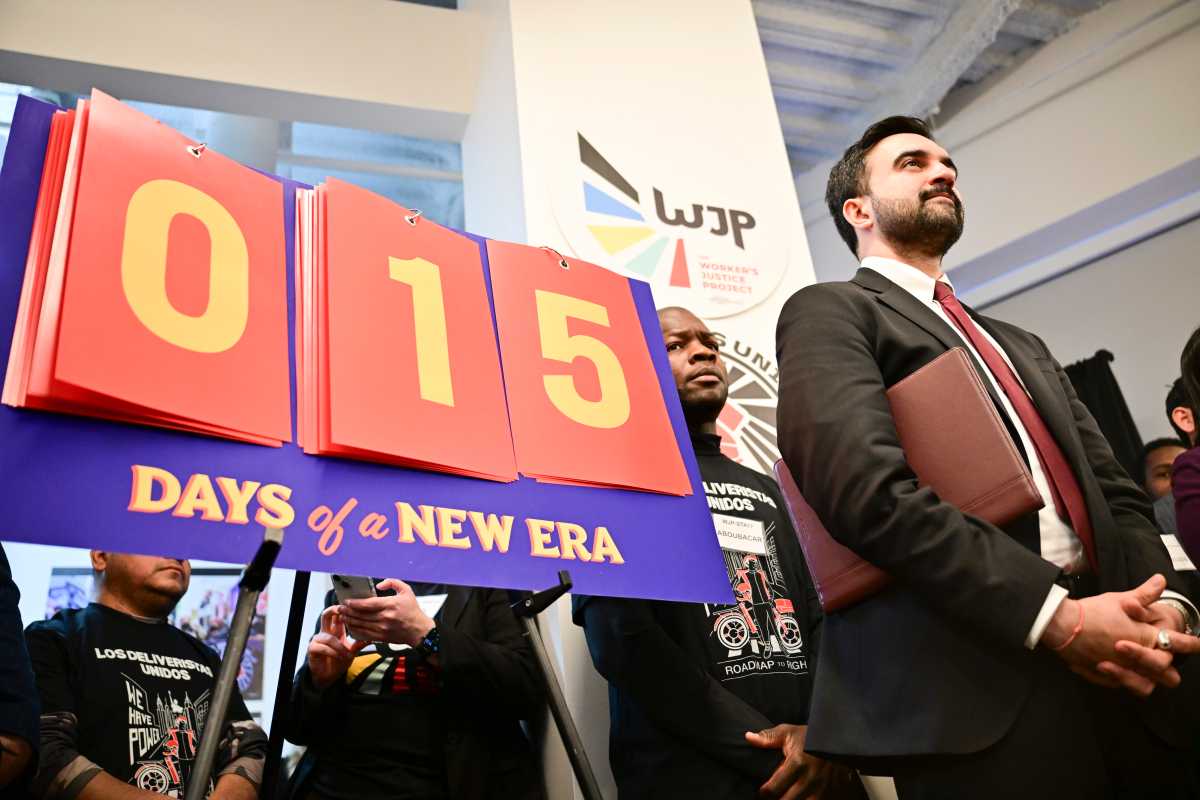
Thursday, Jan. 15, marks the 15th day of Zohran Mamdani’s term as mayor. amNewYork is following Mamdani around his first 100 days in office as we closely track his progress on fulfilling campaign promises, appointing key leaders to government posts, and managing the city’s finances. Here’s a summary of what the mayor did today.
The Mamdani administration began a crackdown on app-based delivery companies on Thursday, filing a lawsuit against delivery platform Motoclick and its CEO, while warning dozens of other companies to comply with sweeping worker protection laws set to take effect later this month.
The lawsuit, filed by the Department of Consumer and Worker Protection (DCWP), accuses Motoclick of stealing pay and tips from delivery workers and failing to comply with New York City’s minimum pay requirements. The case names both the company and its chief executive, a move DCWP Commissioner Sam Levine said reflects a tougher enforcement approach under the Mamdani administration.
Mayor Zohran Mamdani announced the legal action during a press conference at the Deliveristas Unidos worker center in Brooklyn on Jan. 15, stating that the DCWP had received 20 complaints related to Motoclick’s practices. The mayor noted that investigations can often begin with a single complaint, framing the volume of reports against Motoclick as a sign of widespread abuse.
“For context, investigations can often be launched from simply one complaint,” Mamdani said. “This was 20 complaints for a single organization.”
amNewYork has reached out to Motoclick for comment.
Affordability: Mamdani takes aim at delivery worker pay
Mamdani said the lawsuit sends a clear signal to delivery app companies that the city intends to enforce worker protection laws aggressively.
“Companies such as this clearly believe that this is still the politics of the past,” he said. “They are wrong. The deliveristas of the city have the city on their side.”
Alongside the lawsuit, the administration has sent warning letters to 60 app-based delivery companies, notifying them that new Delivery Worker Laws will take effect Jan. 26 and that violations will be enforced. Mamdani said the city does not seek conflict with businesses but will act when companies profit by breaking the law.
The new laws include mandatory upfront tipping prompts and minimum gratuity options on delivery apps, new safety standards for e-bikes used by delivery workers, and expanded city outreach on immigration assistance fraud.
“I want to be very clear, City Hall does not desire to have an adversarial relationship with any business operating in our city,” Mamdani said. “To those, however, who think they can make a profit while stealing from their workers while breaking the law, make no mistake, we will have those workers’ backs each and every time.”
DCWP Commissioner Levine said the Motoclick lawsuit reflects a more aggressive enforcement strategy, including holding individual executives accountable when appropriate. In this case, DCWP is suing Motoclick’s CEO, as well as the company itself.
“We are not only suing Motoclick, seeking full pay and damages to the workers,” Levine said. “We’re suing the company’s CEO.”
Levine said workers reported being charged penalties for canceled orders, being told they owed the company money, and being paid below the city’s minimum pay rate.
“No executive should be exploiting workers to line their own pockets,” Levine said.
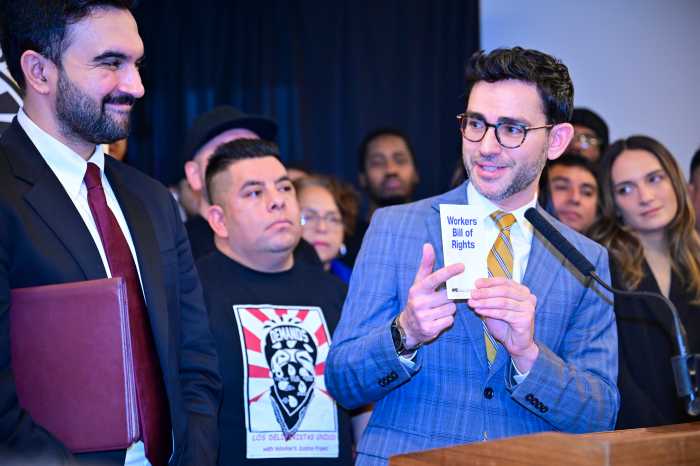
Levine said the lawsuit is part of a broader enforcement blitz launched this week, which includes warning notices sent to delivery apps such as Uber, DoorDash, Grubhub, and Instacart. He said DCWP has also been in court defending tipping protection laws and fighting legal challenges from companies seeking to delay enforcement.
The enforcement push follows a DCWP report released earlier this week that found Uber and DoorDash manipulated their apps’ tipping interfaces by moving tip prompts to after checkout. According to the report, the average tip on those platforms dropped from $3.66 per delivery to 93 cents, costing workers more than $550 million collectively. By contrast, DCWP found that tips remained higher on apps that kept tipping options visible before checkout.
“The new law will require that these companies stop hiding the option to tip from consumers,” Levine said.
Deputy Mayor for Economic Justice Julie Su framed the lawsuit as a warning to the entire app-based delivery industry. “Today’s lawsuit against Motoclick is not just an action against one company,” Su said during the event. “You cannot treat workers like they are expendable and get away with it.”
Su added that companies that refuse to comply risk losing the ability to operate in the city.
“If you don’t play by New York City’s rules, you don’t get to play in New York City,” she said.
Levine acknowledged that lawsuits and investigations can take time and that workers may not receive stolen wages immediately. However, he said, naming executives strengthens the city’s ability to recover money and deter future violations.
“One way is because we name the CEO, that means that even if the company doesn’t have any money, we’re going to be able to get a judgment against the CEO and hopefully recover assets,” Levine said. He added that DCWP will continue naming executives in future cases when the facts support it, citing similar tactics he used while working at the Federal Trade Commission.
Levine said the administration’s broader goal is not constant litigation but compliance across the industry.
“I’d much rather live in a city where companies actually followed the laws that the city passed,” he said. “My goal is for companies to follow the law. If that takes filing a suit, we’re going to do it.”
Additionally, the City is currently in an active legal dispute with DoorDash and Uber over the upcoming regulations that mandate their apps prompt customers to tip at checkout, rather than after an order, and to set a default gratuity of at least 10% of the order. Levine said he expects the city to prevail, “and the new law will require that these companies stop hiding the option to tip from consumers.”
“The fact is, the people of the city want to support deliveristas. We saw with the apps that didn’t manipulate their interface, the tips held steady… The people of the city want to support delivery workers, Uber and DoorDash need to get out of the way, and that’s what the law is going to require,” Levine said.
Separately, Instacart sued the city in December in an effort to overturn a law passed by the City Council last summer that aims to establish minimum wage for grocery delivery workers. Levine said his colleagues in the Law Department were back in court fighting the company’s claim Thursday morning.
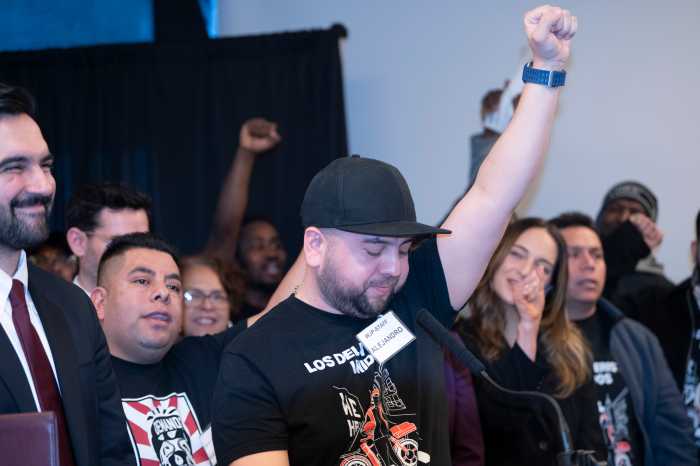
Worker advocates said the lawsuit and warning letters represent a long-awaited shift in how the city responds to labor abuses in the delivery industry. Alejandro Grajales, a leader with Los Deliveristas Unidos who said he previously worked for most delivery apps, including Motoclick, described long hours, unsafe conditions, and pay that sometimes amounted to only a few dollars per delivery.
Grajales said workers were often sent long distances in bad weather and punished by opaque algorithms for slowing down to stay safe.
“We are standing today in the deliverista room. This is where we organize. This is where we plan how to fight the apps. This is where we share our struggles and our dreams. Having you here today sends a clear message to the app companies: the deliveristas are not alone anymore,” said Grajales.
Appointments: Long-delayed report due at the end of 100 days under new chief equity officer
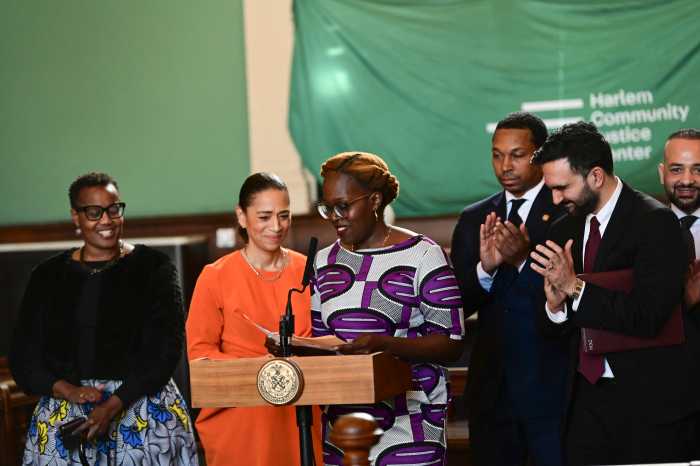
Mayor Mamdani on Thursday afternoon pledged to release the city’s long-delayed racial equity plan within his first 100 days in office, casting the document as a legal obligation and a measure of whether City Hall can translate commitments on equity into action
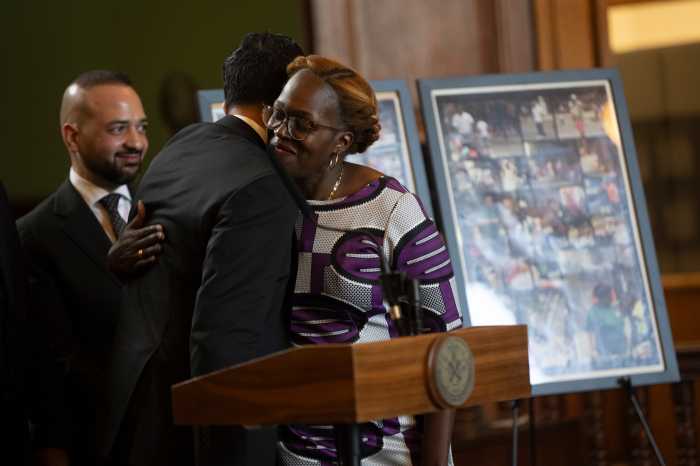
The commitment came alongside the mayor’s appointment of longtime organizer and attorney Afua Atta-Mensah as chief equity officer and commissioner of the Mayor’s Office of Equity and Racial Justice, the office created by voters through a 2022 charter revision. During the general election, Atta-Mensah served as an advisor to Mamdani’s campaign.
Four years ago, nearly 70% of voters approved the revision, which mandated the creation of a new office to collect and report equity-related data, reduce racial disparities, and support city agencies in improving access to services for communities harmed by past policies and actions. The measure also required the city to produce a comprehensive racial equity plan every two years—a deadline the Adams administration missed.
Members of the New York City Commission on Racial Equity urged then–Mayor Eric Adams to release the 2024 Racial Equity Plan early last year, but it was never made public.
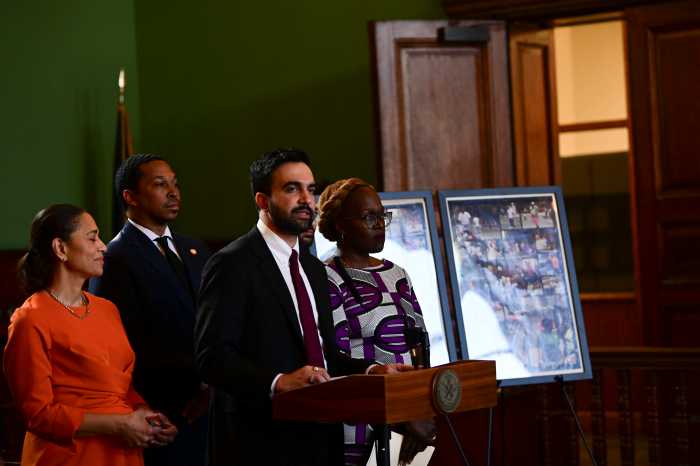
Standing at the Urban Justice Center in Harlem on Jan. 15, Mamdani said the charter change was “a mandate delivered by the people,” promising that under the new administration, “deadlines will be met,” and that City Hall would pursue racial equity “with seriousness and intent.”
The preliminary plan, Mamdani said, will be published within the first 100 days of his administration and will be open to public comment before a final version is released later this year. The plan is expected to assess racial disparities across city agencies and guide future budgeting, policy decisions, and agency performance, as required by the city charter.
Atta-Mensah, who previously led Community Voices Heard and worked as a legal advocate on housing and family defense cases, framed the task as an effort to impose citywide accountability. “This work is ambitious by design,” she said, noting that the charter requires not just planning, but implementation across agencies that have historically operated in silos.
“Reshaping systems that for far too long have directed barriers instead of building on-ramps for opportunity will not be easy,” Atta-Mensah said. She added that she looked forward to “partnering with community leaders” and working alongside city agencies to carry out the charter’s mandate.
Barbara Rice, president and CEO of the New York Urban League, described the chief equity officer role as the city’s “moral architect,” responsible for ensuring that budgets, housing policy, and procurement decisions are evaluated through an equity lens. Rice said that while the organization supports Mayor Mamdani’s administration, it would also serve as a check on it. “Our support is rooted in radical accountability,” Rice said. “We will be the mayor’s greatest partner and also his most honest critic.”
Endorsements: Retiring Rep. Velázquez warns Mamdani against wading into primaries
U.S. Rep. Nydia Velázquez, the longtime Brooklyn and Queens congresswoman who announced last fall that she won’t seek reelection after 16 terms, offered some pointed advice to the new mayor on Thursday: stay out of local legislative primaries.
In a New York Times interview, Velázquez, who had been one of Mayor Mamdani’s earliest backers during last year’s mayoral primary, cautioned that his recent decisions to weigh in on several primary races could fracture the broader progressive coalition that helped elect him.
“Honeymoons are short, and people need to pay attention to the work at hand,” Velázquez told the paper. “Primaries sometimes can be a distraction from the work that you need to do.”
The warning comes amid growing tension between the two progressives. Velázquez backed Mamdani early in his bid for mayor, but appears increasingly frustrated with his latest endorsements — particularly his backing of Assembly Member Claire Valdez, a fellow Democratic Socialist, in the Democratic primary to succeed her in New York’s 7th Congressional District.
Velázquez, for her part, officially lined up behind Brooklyn Borough President Antonio Reynoso, Valdez’s main competitor in the race, on Thursday.
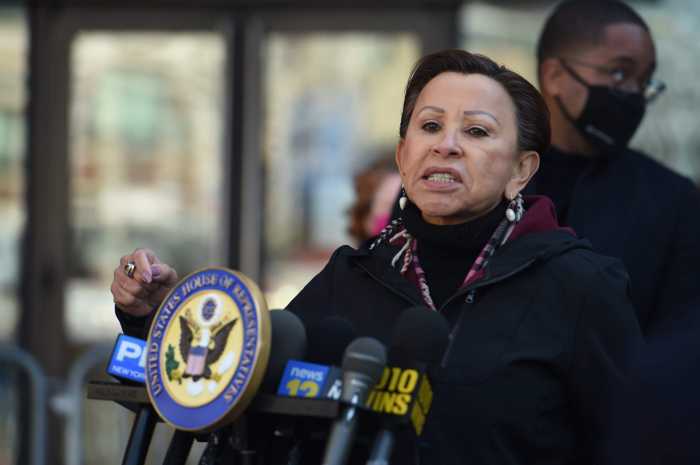
The split has echoed across other local races. Earlier this week, Velázquez endorsed Rana Abdelhamid and Brian Romero in two western Queens Assembly contests, declining to back DSA–endorsed candidates in either race.
Abdelhamid is running in a Feb. 3 special election to succeed Mamdani in the 36th Assembly District, where she faces DSA-backed Diana Moreno, who has the backing of both the Queens Democratic Party and Mamdani himself.
Romero, meanwhile, is running in the 34th District to replace Assembly Member Jessica González-Rojas and is facing Aber Kawas, a DSA-endorsed organizer. While Mamdani has not formally endorsed Kawas, he privately expressed support for her candidacy during a closed-door DSA meeting following his November election victory, according to the Daily News.
Asked about the apparent rift at Thursday’s Harlem press conference, Mamdani sought to strike a conciliatory tone while standing by his endorsements
“I have nothing but respect and admiration for the accomplishments of Nydia Velázquez,” Mamdani said. “I will always appreciate the relationship that we have and the shared vision of making this a city that we’re proud of.”
He added that both he and Velázquez are “proud progressives,” and reiterated his support for Valdez, Moreno and the other candidate he has endorsed so far — Brad Lander, who is challenging incumbent Dan Goldman in the 10th Congressional District.
“These are candidates that I’m excited by, and I’m confident New Yorkers will also be excited by them,” he added.